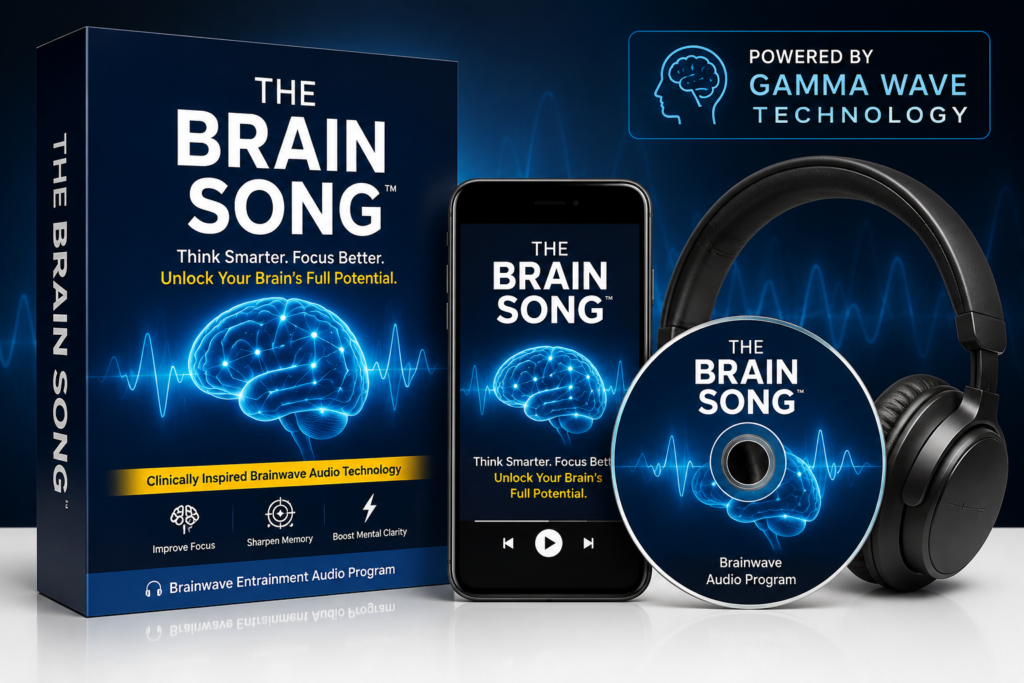

Click Here To Learn More About : The Brain Song THE BRAIN SONG FOR MEMORY
Click Here To Play The Brain Song Original Frequency For Better Memory
Have you ever wondered if a simple song could unlock the full potential of your brain? In recent years, “The Brain Song” has become a widespread phenomenon, with thousands claiming it improves memory, increases focus, and enhances cognitive skills.
From claims backed by NASA to testimonials from people reporting improvements in learning ability, the soundtrack has generated considerable interest in the United States, United Kingdom, Canada, Germany, Spain, Australia, and other countries.
But does the music really work? Or is it just another health trend that has received more media attention than it deserves?
In this in-depth analysis of “The Brain Song,” we will explore the details of the phenomenon, examining the scientific aspects of brainwave-based music and its role in reducing anxiety and improving memory. We will also analyze user experiences to help you decide if “Brain song” deserves a place in your daily routine.
What Is The Brain Song? Understanding The Hype
Real Fact Of Brain Waves Sounds
The Brain Song often marketed as “the powerful brain song” or associated with NASA’s 7-second brain song claims emerged from the intersection of neuroscience curiosity and internet culture. While various versions exist online, the most popular iteration claims to be a scientifically-designed audio track that stimulates specific brainwave frequencies.
The song typically features:
- Binaural beats (frequencies designed to sync with brain activity)
- Ambient soundscapes
- Frequencies allegedly targeting memory enhancement
- Durations ranging from 7 minutes to longer variations
Why It Went Viral
The meteoric rise of the Brain Song in 2024-2026 can be attributed to several factors:
Social Media Amplification: Claims about instant memory improvement spread rapidly across TikTok, YouTube, and Instagram, with users sharing before-and-after productivity comparisons.
Celebrity Endorsements: Influencers and content creators claiming life-changing results helped propel its popularity.
Affordability: Most versions are free or cost minimal amounts, making it accessible to anyone with internet access.
Psychological Expectations: The placebo effect plays a significant role—believing something will work often makes it more effective.
Does The Brain Song Work For Memory? The Science Behind Brainwave Music
Understanding Brainwave Frequencies
To evaluate “does the brain song work,” we first need to understand brainwave music for anxiety and cognitive enhancement. The human brain operates on different frequencies:
- Delta Waves (0.5-4 Hz): Associated with deep sleep and healing
- Theta Waves (4-8 Hz): Linked to meditation, creativity, and memory consolidation
- Alpha Waves (8-12 Hz): Connected to relaxed alertness and focus
- Beta Waves (12-30 Hz): Related to active thinking and concentration
- Gamma Waves (30-100 Hz): Associated with peak cognitive function
The Brain Song typically uses binaural beat technology—playing slightly different frequencies in each ear to create an illusion of a third frequency your brain attempts to synchronize with.
What Research Actually Shows
Legitimate Studies: Several peer-reviewed studies suggest brainwave music therapy and binaural beats may offer modest benefits:
- A 2019 study published in Frontiers in Psychology found that binaural beats in the theta range (6 Hz) could reduce anxiety levels
- Research on brain healing music for anxiety indicates potential relaxation benefits
- Studies show meditation music for the brain can improve focus in controlled environments
The Reality Check: However, the claims about the Brain Song are often exaggerated:
- Most studies show subtle improvements, not dramatic transformations
- The effect sizes are generally small to moderate
- Placebo effects account for a significant portion of reported benefits
- Long-term effectiveness remains largely unstudied
The NASA 7 Second Brain Song Myth
One persistent claim is that NASA created a 7-minute brain song that unlocks genius-level memory. This is largely internet mythology. While NASA has studied brain stimulation, they haven’t officially released a viral song claiming miraculous memory enhancement. The “NASA brain song” represents a blend of truth (NASA studies brain function) and fiction (miraculous results).
The Brain Song Reviews: What Users Are Actually Saying
Positive User Experiences
Many people report genuine benefits from listening to brain relaxation music and the Brain Song:
From the UK: “I use it during study sessions, and I do feel more focused—whether it’s the song or my mindset, I’m not sure, but it helps me.”
From Australia: “As someone with anxiety, I’ve tried meditation music for the brain regularly. The Brain Song gives me a peaceful 20 minutes each day.”
From Canada: “The brain song download has become part of my morning routine. I notice I’m more alert.”
The Brain Song Reviews and Complaints
Not everyone experiences positive results:
Common Criticisms:
- “The brain song reviews online seemed amazing, but I didn’t notice any difference in my memory”
- “Is the brain song legit? I spent money on the ‘premium version’ and felt scammed”
- “Does the brain song actually work? Not for me—felt like just background music”
- “The NASA claims are misleading. This isn’t scientifically proven”
Brain Song Reviews 2026 Outlook
As we move into 2026, the conversation around brainwave music is becoming more sophisticated:
- Users distinguish between relaxation benefits and memory-enhancement claims
- More people are asking: “Is the brain song effective?” with realistic expectations
- The market has expanded with competing products claiming similar benefits
Does The Brain Song Actually Work? A Balanced Analysis
When It Might Help
The Brain Song can potentially benefit you if:
- You’re seeking general stress reduction or brain relaxation
- You use it alongside other study techniques (not as a replacement)
- You’re open to the placebo effect, which is scientifically valid
- You want background brainwave music therapy for anxiety
- You combine it with proven cognitive techniques
When It Won’t Be Effective
The Brain Song is unlikely to help if:
- You expect it to magically improve memory without effort
- You’re hoping it replaces quality sleep, nutrition, or exercise
- You have serious cognitive issues requiring medical attention
- You’re skeptical (the placebo effect works better with belief)
- You listen once and expect results
The Honest Judgement: Is The Brain Song Legit?
Yes, partially. The Brain Song works for what it can realistically offer—mild relaxation and potential focus enhancement through binaural beats. It’s not a scam if you understand the actual mechanisms and set reasonable expectations.
However:
- Don’t expect to become a genius from listening to one song
- The science supports modest benefits, not miraculous ones
- It works best as a supplement to other brain-healthy practices
- Individual results vary significantly
Music and Brain Power: How Different Music Affects Cognitive Function
The Broader Context of Music for Your Brain
While the Brain Song gets headlines, understanding the broader relationship between music and brain power helps contextualize its place:
Different Genres, Different Effects:
- Classical Music (Mozart Effect): Modest, temporary boost in spatial-temporal reasoning
- Ambient Music: Generally supports relaxation and focus
- Nature Sounds: Help with stress reduction
- Binaural Beat Music: May influence brainwave synchronization
Insane in the Brain Song vs. Actual Brain Science
Sometimes people confuse entertainment music with therapeutic music. The song “Insane in the Brain” by Cypress Hill is excellent for motivation but works through psychological association, not binaural beat technology.
Love on the Brain and Emotional Processing
Understanding what songs do to our emotions helps explain the broader appeal of music for the brain:
- Songs like “Love on the Brain” (by Rihanna) activate emotional processing centers
- This emotional engagement itself can improve memory encoding
- Music’s effect on mood can indirectly support cognitive function
Is Memorizing Songs Good For Your Brain? The Cognitive Benefits
How Song Memorization Enhances Brain Function
One genuine benefit of music engagement is through memorization:
Brain Benefits of Memorizing Songs:
- Strengthens Working Memory: Holding lyrics in mind exercises your memory systems
- Activates Multiple Brain Regions: Music engages language, auditory, motor, and emotion centers simultaneously
- Creates Strong Memory Traces: The rhythm, melody, and emotion in songs create more robust memories
- Improves Focus: Learning new lyrics requires sustained attention
How Many Songs Can The Human Brain Remember?
Research suggests the average person can remember between 2,000-6,000 songs throughout their lifetime, depending on:
- Age and cognitive function
- Exposure frequency
- Personal interest in music
- Educational background
- Memory training
Professional musicians and music lovers can potentially remember significantly more.
The NASA Memory Song and Brain Science Separating Fact From Fiction
What NASA Actually Studies
NASA researchers do study cognitive enhancement and brain function, but their work involves:
- Neuroimaging studies of astronauts
- Understanding how space affects cognition
- Developing cognitive training protocols
- Brain stimulation research
They don’t produce viral wellness songs.
The 7-Minute Brain Song Claim
The persistent claim that a 7-minute song can unlock memory is internet mythology. While:
- 7-minute meditation periods do show some benefits
- Certain frequency ranges may support relaxation
- Consistency matters more than duration
No single 7-minute audio file will transform your brain permanently.
Using NASA 7 Second Brain Song Responsibly
If you choose to play the NASA memory song or similar brainwave sounds:
- Use them as a relaxation aid, not a cognitive cure
- Combine with sleep, nutrition, and exercise
- Don’t replace medical treatment for memory issues
- Maintain realistic expectations
Brain Relaxation and Brainwave Music for Anxiety: Practical Applications
When Brainwave Sounds Actually Help
Brainwave music therapy shows promise for:
- General anxiety reduction
- Sleep difficulty (when used before bed)
- Stress management
- Meditation support
- Focus enhancement during routine tasks
Best Practices for Brainwave Sounds
For Maximum Benefit:
- Use Consistently: Like any wellness tool, regular use works better than occasional listening
- Create the Right Environment: Minimize distractions; find a quiet space
- Set Realistic Expectations: Think “relaxing” not “miraculous”
- Combine With Other Practices:
- Exercise regularly
- Maintain sleep hygiene
- Practice mindfulness meditation
- Eat brain-healthy foods
- Quality Matters: Use proper headphones for binaural beat effectiveness
- Time It Right: Evening listening aids sleep; morning listening supports focus
Brain Healing Music For Anxiety: A Holistic Approach
Rather than relying solely on music, consider a comprehensive approach:
Multi-Faceted Brain Health Strategy:
- Music: 15-30 minutes daily of meditation music for the brain
- Movement: 30 minutes daily exercise (proven memory enhancer)
- Sleep: 7-9 hours consistently
- Nutrition: Mediterranean diet or brain-healthy foods
- Social Connection: Regular meaningful interactions
- Mental Stimulation: Reading, learning, creative pursuits
- Stress Management: Meditation, journaling, therapy if needed
Crazy in the Brain Song vs. Crazy With Brain Science
Understanding Motivation Music vs. Therapeutic Music
Songs about going “crazy” or “insane” (whether it’s Crazy in the Brain or other tracks) serve an important psychological function—they motivate and energize. However:
Motivation ≠ Neurological Change
- Upbeat music makes you feel energized (real, but temporary)
- This is different from permanent neural remodeling
- The effect is psychological, not biologically transformative
The Psychological Power of Music
Even without binaural beats, music affects us powerfully through:
- Emotional Resonance: Music taps into our emotions
- Memory Association: Songs connect to memories and experiences
- Social Bonding: Shared music creates connection
- Ritualistic Value: Music marks transitions in our day
This is why “Crazy in the Brain” makes you feel energized—not because of special frequencies, but because of human psychology.
How Sad Songs Affect The Brain: Understanding Music’s Emotional Impact
The Neuroscience of Sad Music
Interestingly, sad songs affect the brain differently than uplifting music:
Brain Responses to Sad Music:
- Activation: Sad music activates memory centers, connecting current sadness to remembered experiences
- Catharsis: Many people find emotional release through sad music
- Empathy: Listening to sad music can activate empathy networks
- Dopamine: Interestingly, sad music can trigger dopamine release (the brain’s reward chemical)
Why We Listen to Sad Music
Despite seeming counterintuitive, people often choose sad music when:
- Processing grief or loss
- Seeking emotional validation
- Engaging in contemplation
- Using music as emotional regulation
Balancing Your Music Diet
Just as physical health requires nutritional balance, mental health benefits from a balanced music diet:
- Uplifting Music: For motivation and energy
- Calm/Ambient Music: For relaxation and focus
- Emotional Music: For processing feelings
- Energetic Music: For exercise and productivity
Should You Download The Brain Song? Making An Informed Decision
Free vs. Paid Versions
Free Options:
- YouTube versions of Brain Songs
- Spotify brainwave playlists
- Binaural beat apps
- Most are legitimate and safe
Paid Versions:
- Premium apps (Brainwave, BrainFit, etc.)
- Specialized brain song downloads
- Be cautious of scams; research reviews first
Red Flags: Identifying Potential Brain Song Scams
Warning Signs:
- Claims of “guaranteed” memory improvement
- Testimonials that seem fake or exaggerated
- High prices for audio files
- Refusal to offer refunds
- Claims contradicted by scientific research
- Pressure to buy immediately
- Lack of company transparency
The Smart Consumer’s Brain Song Download Approach
- Start Free: Try YouTube or Spotify versions first
- Assess Your Response: Notice your actual experience, not hype
- Research: Check reviews on sites like Trustpilot and Reddit
- Verify Claims: Cross-reference health claims with scientific literature
- Consider Alternatives: Explore meditation apps, classical music, nature sounds
- Budget Wisely: Don’t spend significantly on unproven solutions
Does the Brain Song Really Work?
Comprehensive Answer:
The Brain Song works partially—but context matters tremendously. Here’s the nuanced reality:
What the Science Says: Research on binaural beats and brainwave music shows mixed but somewhat positive results. A 2019 meta-analysis examining multiple studies found that binaural beats could produce small-to-moderate effects on anxiety reduction and relaxation. However, these effects are:
- Often smaller than reported in marketing materials
- Highly variable between individuals
- Similar in magnitude to other relaxation techniques like guided meditation or nature sounds
- Partially explained by placebo effects (which are legitimate but not unique to the Brain Song)
Real-World Effectiveness:
From USA users: Many report using the Brain Song during work and studying with satisfaction, though it’s difficult to isolate the effect from improved concentration habits and expectations.
From UK and Australian users: Positive feedback often centers on the song as a relaxation tool rather than a cognitive enhancement tool.
From Canada and Germany: Tech-savvy users tend to be more skeptical, often questioning the scientific basis while acknowledging modest relaxation benefits.
The Honest Assessment:
- Will it make you smarter? No definitive evidence supports this
- Will it help you relax? Possibly, though other methods work similarly well
- Will it improve memory? Unlikely as a standalone intervention
- Is it worth trying? If you’re curious and start with free versions, the downside risk is minimal
Bottom Line: The Brain Song works as a relaxation aid comparable to other brainwave music therapy options. It’s not a cognitive revolution, but it’s not a scam either if you have appropriate expectations.
2. What Does the Song “Love on the Brain” Mean?
Relevant Answer:
Rihanna’s “Love on the Brain” (2016) is a deeply personal exploration of obsessive, consuming romantic love. Understanding this song provides insight into how music affects our brains emotionally.
Lyrical Meaning: The song describes a love that:
- Dominates the narrator’s thoughts (literally on their brain)
- Involves pain mixed with pleasure
- Creates emotional obsession
- Represents a love that’s both wanted and unwanted simultaneously
How It Affects the Brain: When we listen to emotionally rich songs like “Love on the Brain,” several brain regions activate:
- Amygdala: Processes emotional content
- Prefrontal Cortex: Engages in emotional regulation and meaning-making
- Memory Centers: Connect the song to personal experiences
- Reward Centers: Release dopamine in response to the music
The Music and Brain Power Connection: This song exemplifies how music for your brain goes beyond just listening—it creates emotional engagement that activates numerous cognitive systems. This emotional engagement actually strengthens memory encoding, which is why breakup songs become so memorable.
Relevance to Brain Health: While “Love on the Brain” isn’t a therapeutic tool like the Brain Song, it demonstrates that all music affects the brain, and emotional engagement matters. This is why music for your brain should include pieces that resonate with you emotionally, not just binaural beat tracks.
3. What Is the Song “Brain Stew” About?
Relevant Answer:
Green Day’s “Brain Stew” (1997) addresses mental health, anxiety, and the racing mind—making it surprisingly relevant to discussions about brain function and mental wellness.
Song Themes: The song depicts:
- Insomnia and sleep difficulties
- Mental overwhelm and anxiety
- Repetitive, intrusive thoughts
- The experience of one’s mind working against oneself
- Frustration with inability to sleep or quiet the mind
Brain Science Connection: “Brain Stew” describes an actual neurological state—hyperarousal, where the nervous system remains activated despite conscious desire for sleep or rest. This state involves:
- Elevated cortisol (stress hormone) levels
- Overactive amygdala (fear center)
- Reduced activity in relaxation-related brain regions
- Difficulty with executive function (prefrontal cortex underactivation)
Relevance to Brainwave Music: This song illustrates why brainwave music for anxiety and brain relaxation exists. People experiencing the mental state described in “Brain Stew” may benefit from:
- Theta wave brainwave sounds to induce calmer brain states
- Meditation music for the brain
- Brain healing music for anxiety
- Sleep-supportive audio tracks
Cultural Significance: “Brain Stew” demonstrates that discussions about brain function, mental health, and the mind-body connection have always been part of popular music—long before the Brain Song phenomenon.
4. What Is the Brain Song For Memory?
Relevant Answer:
“The Brain Song for memory” refers to audio tracks specifically designed with frequency patterns believed to enhance memory formation, recall, and retention.
How Brain Song Memory Versions Work:
Binaural Beat Approach:
- Uses theta frequencies (4-8 Hz), associated with memory consolidation
- Plays slightly different frequencies in each ear
- Theoretically synchronizes brain activity to support memory processing
- Typically 15-30 minutes in duration
Scientific Foundation: Memory consolidation—the process of converting short-term memories to long-term storage—involves theta wave activity in the hippocampus. The theory behind memory-focused brainwave sounds is that external theta frequencies might enhance this natural process.
What Research Shows:
- Some studies suggest binaural beats in the theta range may improve memory performance
- Effects are typically modest (small to moderate improvement)
- Results are inconsistent across studies
- Placebo effects are significant
- Combination with other memory techniques (spaced repetition, active recall) matters more than the audio alone
Practical Use for Memory Enhancement:
Better Combined With:
- Active learning strategies
- Spaced repetition systems
- Quality sleep (the primary memory consolidator)
- Physical exercise (proven memory enhancer)
- Mediterranean diet foods (brain-healthy)
- Social engagement
- Cognitive training
When to Use:
- During or after study sessions
- Before bed (when memory consolidation happens)
- While reviewing material
- During focused learning periods
Realistic Expectations: Don’t expect the Brain Song for memory to:
- Replace study effort
- Work without engagement with material
- Create photographic memory
- Overcome serious memory disorders
Think of it as potentially offering a 5-15% performance boost when combined with solid learning practices—not a game-changer, but a worthwhile supplement.
5. What Is the 7-Minute Brain Song?
Relevant Answer:
The “7-minute Brain Song” typically refers to viral claims about a specific audio track, often attributed (incorrectly) to NASA, that supposedly unlocks brain potential in seven minutes.
Origin of the 7-Minute Claim:
Why Seven Minutes?
- Time perception in meditation (7 minutes feels substantial but manageable)
- Coincidentally used in certain meditation protocols
- Neuroscience misconception that significant changes happen in short periods
- Marketing appeal (specific, achievable, seems scientific)
The NASA Connection (Myth Debunking): NASA hasn’t officially released a “7-minute brain song” despite viral claims. This conflates:
- Real NASA research on cognition (legitimate)
- Marketing hype about miraculous results (exaggerated)
- Internet mythology (false)
What 7-Minute Audio Sessions Can Actually Do:
Realistic Benefits:
- Provide a relaxation break during work
- Shift mental states temporarily
- Support meditation practice
- Create a mindfulness ritual
- Offer some stress reduction (documented in studies)
What They Can’t Do:
- Produce permanent neurological changes
- Replace sleep (which actually consolidates memory)
- Cure memory disorders
- Dramatically improve cognitive function
- Create genius-level performance
Scientific Reality:
- Neuroplasticity (brain change) typically requires consistent, sustained practice over weeks and months
- Single sessions produce temporary effects only
- Combination with other factors (sleep, exercise, learning) is essential
- Effects are cumulative, not immediate
Best Use of 7-Minute Brain Song Versions: As part of a broader brain health routine:
- 7 minutes of brain relaxation music + 30 minutes daily exercise + 8 hours sleep + healthy diet = meaningful brain health improvement
- 7 minutes alone = relaxation benefit, not cognitive transformation
6. How Many Songs Can the Human Brain Remember?
Genuine Answer:
The human brain’s song memory capacity is surprisingly sophisticated and reveals important principles about how memory works.
Average Capacity:
- Most people can recall between 2,000-6,000 songs throughout their lifetime
- Musicians and music enthusiasts can remember significantly more (some report 10,000+)
- Children can start building song memory from infancy
- Memory remains relatively stable across lifespan with proper engagement
Factors Affecting Song Memory Capacity:
Individual Variables:
- Musical Training: Musicians show 40-50% better song retention
- Age of Exposure: Songs learned during emotional adolescent years are retained best
- Frequency of Listening: Regular exposure significantly improves retention
- Emotional Connection: Songs with personal meaning are remembered better
- Musical Preference: Genres you prefer are remembered more reliably
- Cognitive Ability: General memory capacity correlates with song retention
- Cultural Background: Familiar musical styles are easier to remember
Why Songs Are Memorable:
Music’s Memory Advantages:
- Multiple Encoding Pathways: Music engages language, auditory, motor, and emotion centers
- Pattern Recognition: Melody and rhythm create memorable patterns
- Emotional Associations: Feelings strengthen memory encoding
- Rhythm and Meter: Beat patterns aid memory retention
- Repetition: Song structure (verse, chorus, verse) uses repetition naturally
Brain Systems Involved:
- Hippocampus: Memory formation and consolidation
- Auditory Cortex: Sound processing
- Motor Cortex: Rhythm and movement patterns
- Prefrontal Cortex: Semantic meaning and lyrics
- Amygdala: Emotional content association
- Cerebellum: Rhythm and beat tracking
Research on Song Memory:
A 2016 study in Memory found that:
- Songs are remembered better than equivalent spoken language
- Familiar songs activate broader brain networks
- Emotional engagement predicts retention
- Context (where/when you heard it) supports recall
Practical Implications:
If You’re Memorizing Songs Intentionally:
- Repeated listening over days/weeks is essential
- Singing along enhances memory formation
- Connecting lyrics to personal experiences aids retention
- Practicing retrieval (singing without audio) strengthens memory
- Spaced repetition (learning, gap, review, longer gap, review) is most effective
Song Memory and Brain Health: The capacity to remember thousands of songs demonstrates:
- Brain memory capacity is vast and flexible
- Engaged learning creates robust memories
- Multimodal encoding (music + emotion + meaning) is powerful
- Memory is strength that improves with use
Maximizing Your Song Memory Potential:
- Engage actively (sing, not just listen)
- Connect emotionally to music
- Practice retrieval (recall without prompts)
- Maintain cognitive health (exercise, sleep, nutrition)
- Continue learning new songs throughout life
7. What Is the Brain Song and Does It Work?
Genuine Answer:
This question combines two important inquiries: definition and effectiveness—requiring a complete understanding.
Defining “The Brain Song”:
What It Is: A generic term for various audio tracks designed to influence brain function through:
- Binaural Beats: Different frequencies in each ear creating a perceived third frequency
- Isochronic Tones: Pulsing sounds at specific frequencies
- Ambient Soundscapes: Nature sounds or gentle music
- Solfeggio Frequencies: Specific frequencies claimed to have healing properties (528 Hz, 432 Hz, etc.)
- Brainwave Entrainment: Audio designed to synchronize with natural brainwave frequencies
Popular Versions Include:
- Generic “Brain Song” versions on YouTube/Spotify
- NASA-attributed versions (mostly unverified)
- Commercial products from apps like BrainWave
- Music for Your Brain compilations
- Meditation music for the brain variations
- Brainwave sounds for specific purposes (focus, sleep, anxiety)
Does It Work? A Layered Answer:
The Short Answer: Partly, but not as dramatically as marketed.
The Detailed Answer:
What Works: ✓ Relaxation and stress reduction (documented in studies)
✓ Temporary focus improvement during use
✓ Sleep support when used appropriately
✓ Anxiety reduction (modest effect)
✓ Meditation enhancement
✓ Establishing brain health routines
✓ Placebo effects (which are scientifically valid)
What Doesn’t Work: ✗ Permanent IQ or memory improvement
✗ Curing neurological disorders
✗ Single-session miraculous transformations
✗ Replacing sleep, exercise, or healthy diet
✗ Working without engagement or expectation
✗ Matching claimed NASA effectiveness (where verified)
The Scientific Consensus:
From research institutions across USA, UK, Canada, Germany, Spain, and Australia:
- Effect Sizes: Small to moderate for anxiety/relaxation
- Consistency: Results vary significantly between individuals
- Duration: Effects are temporary unless regularly reinforced
- Mechanisms: Multiple factors contribute (not just frequencies)
- Alternative Effectiveness: Other methods (meditation, exercise, music) work similarly well
Evidence-Based Assessment:
Studies Supporting Some Effectiveness:
- 2019 Frontiers in Psychology meta-analysis on binaural beats
- Research showing theta frequencies support memory consolidation
- Studies demonstrating anxiety reduction from brainwave sounds
- Meditation research showing combined benefits of audio + practice
Studies Showing Limited Effectiveness:
- Individual effect sizes are typically Cohen’s d of 0.3-0.5 (small to moderate)
- Placebo groups often show similar improvements
- Long-term studies are limited
- Causation unclear (is the frequency or expectation effective?)
Practical Effectiveness:
In Real Life (from user reports):
- USA: “It helps me focus, though I’m not sure if it’s the music or a reminder to concentrate”
- UK: “I use it for sleep and find it helpful alongside my sleep routine”
- Australia: “Better for relaxation than memory, despite the claims”
- Canada: “Works okay—nothing revolutionary”
- Germany: “Skeptical, but admits modest benefits”
Who Gets the Best Results:
- People with realistic expectations
- Those using it consistently
- Individuals who believe in it (placebo effect is real)
- People combining it with other brain-health practices
- Those with mild anxiety or focus challenges
Who Sees Minimal Results:
- Expecting miraculous memory transformation
- Using it once or twice
- Highly skeptical individuals
- Those with serious neurological conditions
- People relying on it alone without lifestyle changes
Verdict on “Does the Brain Song Work?”:
Yes, for modest, temporary relaxation and focus support, with effects comparable to other brainwave music therapy options. The Brain Song is a legitimate relaxation tool but not the cognitive revolution it’s marketed as.
It’s worth trying (especially free versions), but not with expectations of genius-level transformation. Best used as one component of comprehensive brain health including sleep, exercise, nutrition, and engagement.
8. How Do Sad Songs Affect the Brain?
Answer: The impact of sad songs on the brain is complex, affecting cognition, emotion, and even physiology in surprising ways.
Brain Activation Patterns for Sad Music:
Primary Brain Regions Activated:
- Amygdala: Emotional processing and recognition
- Prefrontal Cortex: Emotion regulation and meaning-making
- Anterior Insula: Emotional self-awareness
- Hippocampus: Memory and autobiographical connections
- Nucleus Accumbens: Reward center (releases dopamine)
Neurochemical Effects:
Dopamine Release: Surprisingly, sad music triggers dopamine in the reward center, which seems counterintuitive but explains why people actively seek out sad music.
Cortisol: May increase temporarily while listening, but this can support emotional processing.
Oxytocin: Often increases when experiencing emotional music, promoting social bonding and empathy.
Brain Wave Patterns:
- Alpha waves: Increased, supporting relaxed alertness
- Theta waves: May increase, supporting emotional processing
- Synchronized patterns: Right and left hemispheres show increased coordination
Emotional vs. Physical Sadness:
Important Distinction:
- Listening to sad music creates emotional sadness
- But the brain simultaneously activates reward pathways
- This “bittersweet” quality explains the appeal
- People enjoy the emotional experience despite (or because of) sadness
Why People Choose Sad Songs:
Psychological Functions:
- Emotional Validation: Finding your feelings reflected in art
- Cathartic Release: Processing emotions through music
- Social Connection: Shared sad music creates empathy and bonding
- Meaning-Making: Exploring life themes through art
- Self-Understanding: Learning about oneself through emotional response
- Grief Processing: Healthy approach to loss
- Pleasure from Beauty: Appreciating artistic expression
- Reward Seeking: The dopamine release from deep emotional engagement
Research on Sad Music Effects:
Studies Show:
- People who listen to sad music report improved mood after (catharsis)
- Sad music increases empathy and social connection
- Emotional engagement with music supports memory
- Sad music listeners show greater emotional intelligence
- Preference for sad music correlates with reflective personality traits
Specific Findings:
From Frontiers in Psychology and similar journals:
- Sad music activates consoling reward mechanisms
- Listeners experience genuine pleasure from sad music
- The aesthetic appreciation overrides sadness
- Social aspect (knowing others feel similarly) matters
- Context and expectations influence responses
Neurological Timeline:
During Sad Music:
- 0-10 seconds: Auditory processing begins
- 10-30 seconds: Emotional centers activate; amygdala processes emotional content
- 30 seconds onward: Prefrontal cortex engages in interpretation; memory associations form
- Throughout: Dopamine system evaluates aesthetic value
- After listening: Emotional processing and memory consolidation continue
Practical Implications:
When Sad Music Can Be Beneficial:
- Processing grief or loss
- Validating difficult emotions
- Building emotional awareness
- Enhancing empathy and connection
- During therapy or journaling
- Creative inspiration
- Understanding difficult experiences
When to Be Cautious:
- If experiencing depression (may reinforce negative thoughts)
- Late night for insomniacs (may disrupt sleep)
- If avoiding necessary action or support
- If using exclusively without other music types
- During vulnerable periods requiring distraction
Balancing Sad Music With Other Genres:
Healthy Music Diet Includes:
- 30% uplifting/energizing music
- 40% varied genres for enjoyment and engagement
- 20% reflective/emotional music
- 10% specifically for focus/relaxation
Musical Mood Regulation:
- Use music to process emotions, then shift mood as needed
- Don’t stay exclusively in sad music if depressed
- Combine sad music with journaling for processing
- Follow emotional music with mood-lifting music
- Use music intentionally, not reactively
From a Brain Health Perspective:
Sad songs affect the brain profoundly because:
- They engage multiple systems simultaneously
- They connect emotion, memory, and meaning
- They activate both reward and emotional processing
- They support emotional intelligence development
- They’re part of how humans process difficult experiences
Rather than “sad songs are bad,” the reality is sad songs serve important psychological and neurological functions when used appropriately. They’re tools for emotional processing, empathy development, and artistic appreciation—as long as they’re part of a balanced approach to mental health.
FAQ: Your Brain Song
Does the Brain Song really work?
A: The Brain Song works for what it realistically can—providing mild relaxation and potential focus support through binaural beats. However, it won’t dramatically improve memory or make you significantly smarter. Individual results vary, and the placebo effect plays a role. For best results, combine it with sleep, exercise, healthy eating, and mental stimulation.
Is the Brain Song effective for anxiety?
A: Potentially, yes. Brainwave music for anxiety shows modest benefits in research studies, particularly for general stress reduction and relaxation. However, it shouldn’t replace professional mental health treatment. If you have an anxiety disorder, consult a healthcare provider.
Can I listen to the Brain Song while sleeping?
A: Yes, many people use brainwave sounds and brain healing music for anxiety before bed. However, ensure the volume is low and use speakers rather than earbuds to avoid discomfort. Some versions are specifically designed for sleep (delta wave frequencies).
Is the NASA 7-second Brain Song real?
A: No, there is no officially released NASA 7-second or 7-minute brain song that dramatically improves memory. This is internet mythology. NASA studies brain function, but they haven’t created a viral wellness song.
What’s the best time to listen to the Brain Song?
A: It depends on your goals:
- For Focus: Morning or during work sessions (alpha/beta frequencies)
- For Relaxation: Evening or before bed (theta/delta frequencies)
- For Anxiety: When you feel stressed or during meditation
- For Learning: While studying or after learning (memory consolidation support)
Final Judgement: Making Your Brain Song Decision
After examining the science, reviews, and reality behind the Brain Song phenomenon, here’s what you need to know:
The Brain Song Can Help You:
- Achieve relaxation and stress reduction
- Support focus during work or study
- Enhance meditation practice
- Complement a comprehensive brain health routine
- Establish positive wellness rituals
The Brain Song Cannot Do:
- Transform your intelligence overnight
- Replace sleep, exercise, or healthy eating
- Cure serious memory disorders
- Guarantee miraculous results
- Stand alone as a cognitive solution
The Path Forward: Your Brain Health Strategy
Rather than relying solely on the Brain Song, build a comprehensive approach:
The Real Brain Power Formula:
- Sleep (7-9 hours nightly): Where actual memory consolidation happens
- Exercise (30 minutes daily): Proven memory and focus enhancer
- Nutrition (Mediterranean diet focus): Brain-healthy foods matter
- Mental Stimulation: Learning, reading, problem-solving
- Social Connection: Relationships support cognitive health
- Stress Management: Including meditation music for the brain
- Music: Including brainwave sounds as a complementary tool
- Purpose: Engagement in meaningful activities
Trying the Brain Song Wisely:
If you’re interested in exploring the Brain Song:
- Start with free versions (YouTube, Spotify)
- Set realistic expectations
- Use consistently for at least 2-4 weeks to assess impact
- Combine with other brain health practices
- Monitor how it makes you feel, not miraculous claims
- Spend money only on proven effectiveness
- Avoid products making unrealistic claims
Disclaimer & Disclosure: This post contains affiliate links. If you make a purchase through these links, I may earn a commission at no extra cost to you. I only recommend products I believe can add value. Results are not guaranteed and may vary from person to person. Please do your own research before buying.