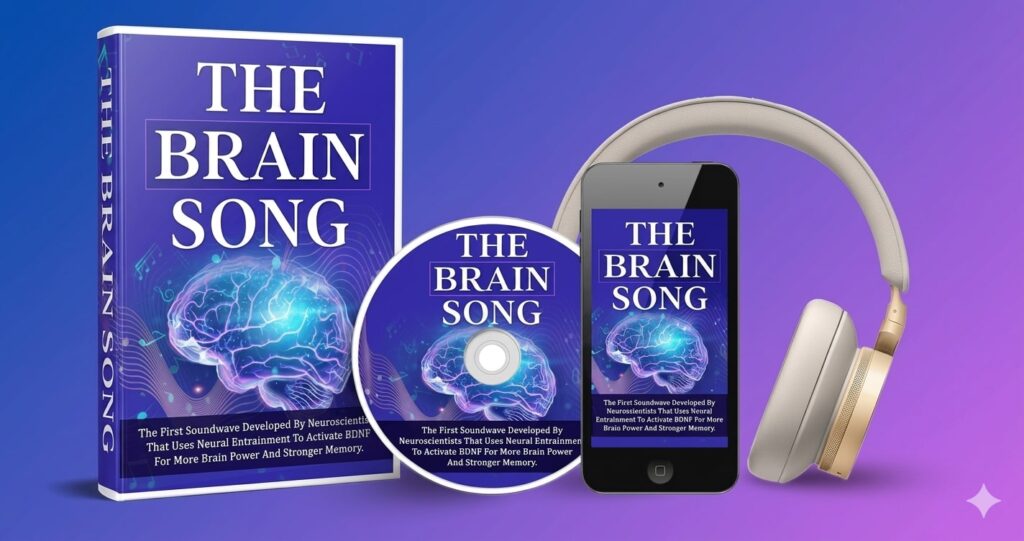

Click Here To Learn More About The Brain Song THE BRAIN SONG FOR MEMORY
Click Here To Play The Brain Song Original Frequency For Better Memory
You have likely seen claims on social media that a single song can unlock your brain’s hidden potential, boost your memory, and transform your cognitive abilities. The so-called “Brain Song” has taken platforms like TikTok, YouTube, and Instagram by storm, with thousands of people claiming its effects are miraculous.
But the question keeping many people up at night arises: does the “Brain Song” actually work? Is it legitimate science, or a clever marketing strategy designed to capitalize on people desperate to improve their brainpower?
The reality is more complex than the media hype suggests.
In this comprehensive analysis of the “Brain Song” we will cut through the noise and examine what science actually tells us about music and the brain. We will investigate the song’s authenticity, analyze claims regarding the alleged “NASA 8-second brain song” and help you understand how music affects cognitive function. Whether you are simply curious about viral social media trends or genuinely interested in improving your memory, this guide will provide the honest answers you are looking for.
Let’s dive into the shocking truth.
What Is The Brain Song? Separating Hype From Reality
Understanding The Phenomenon
The Brain Song isn’t actually one specific song—it’s a category of audio tracks marketed with increasingly wild claims about cognitive enhancement. These tracks typically use:
Common Features:
- Binaural beats (different frequencies in each ear)
- Isochronic tones (rhythmic pulses)
- Specific frequency ranges (usually theta or alpha waves)
- Ambient soundscapes or minimal musical elements
- Durations ranging from seconds to 30+ minutes
The tracks come in various formats:
- Free YouTube videos claiming NASA endorsement
- Premium apps promising memory transformation
- Spotify playlists labeled “Brain Song“
- Downloaded audio files promising “brain power”
Why The Brain Song Went Viral
The explosion of the Brain Song across USA, UK, Canada, Germany, Spain, and Australia isn’t accidental. Several factors created the perfect storm:
Factor 1: Social Media Amplification Creators post videos showing dramatic productivity improvements while playing the brain song. These get shared millions of times, creating FOMO (fear of missing out) for anyone not using it.
Factor 2: Appealing Simplicity The promise is intoxicating: listen to one song and get smarter. No effort required. No lifestyle changes necessary. Just press play.
Factor 3: Scientific-Sounding Language Terms like “binaural beats,” “brainwave entrainment,” and “frequency optimization” sound legitimate, making people assume serious science backs these claims.
Factor 4: Testimonial Overload Thousands of people sharing success stories create social proof—but many testimonials are anecdotal, unverified, or influenced by expectation bias.
Is The Brain Song A Scam? Understanding The Truth
Is the Brain Song a scam? The answer is: not entirely, but it’s often marketed deceptively.
Here’s the distinction:
It’s NOT a scam if:
- ✅ You’re using free versions (YouTube, Spotify)
- ✅ You understand what it can realistically do
- ✅ You’re seeking relaxation or focus support
- ✅ You recognize the placebo effect as valid
- ✅ You combine it with other brain health practices
It IS potentially scammy if:
- ❌ You’re paying premium prices for unproven claims
- ❌ The seller claims guaranteed memory improvement
- ❌ NASA endorsement is used without verification
- ❌ Testimonials seem fake or exaggerated
- ❌ No refund policy exists
- ❌ You’re ignoring red flags
Red Flags That Indicate Brain Song Scams
Unrealistic Claims Any product claiming to “triple your IQ” or guarantee specific memory improvements is overselling. Legitimate cognitive science doesn’t work in guarantees.
Celebrity Doctor Endorsements Fake testimonials from celebrities or doctors claiming the brain song transformed their life. Real doctors maintain scientific standards and don’t make such claims.
High Pressure Sales “Limited time offer!” “Only 100 downloads available!” These artificial scarcity tactics indicate questionable legitimacy.
Impossible NASA Claims The viral “NASA 8 second brain song” or “NASA brain song that quadruples IQ” are myths. NASA doesn’t market viral wellness products.
No Refund Policy Legitimate products offer 30-60 day money-back guarantees. Scammers don’t.
Warning Sign #6: Expensive Downloads A digital audio file shouldn’t cost $50-100. If it does, you’re likely overpaying for claims rather than a product.
How To Verify Legitimacy
If you’re considering a brain song product, ask these questions:
- What’s the source? Can you verify the seller’s credentials?
- Where’s the science? Are there peer-reviewed studies backing the claims?
- What do independent reviews say? Check Trustpilot, Reddit, and consumer forums
- What’s the refund policy? Safe products offer money-back guarantees
- Are claims realistic? Does it promise impossible results?
- Is the price reasonable? Digital audio shouldn’t cost more than a month of streaming services
Does The Brain Song Really Work? What Science Says
The Scientific Reality About Music and Brain Power
To answer “does the brain song really work,” we need to understand what research actually shows about music and the brain.
What Peer-Reviewed Research Finds:
A 2019 meta-analysis in Frontiers in Psychology examining binaural beat studies concluded:
- Small to moderate anxiety reduction is possible
- Effect sizes are typically around 0.3-0.5 (modest improvements)
- Results vary significantly between individuals
- Placebo effects account for substantial portions
- Long-term effectiveness remains unclear
What This Means: The brain song can produce real effects, but they’re usually:
- Temporary (lasting minutes to hours)
- Subtle (noticeable but not transformative)
- Variable (works great for some, not at all for others)
- Similar to other relaxation methods (not uniquely powerful)
Brain Rot Songs vs. Actual Brain-Enhancing Music
You’ve probably heard of “brain rot songs”—viral tracks that supposedly damage your brain or hypnotize you into stupidity. This is internet folklore with no scientific basis.
The Truth About Brain Rot Songs:
- There’s no neurological mechanism by which a song causes “brain rot”
- Repetitive, catchy songs get stuck in your head (normal auditory processing)
- Concern about brain rot songs reflects anxiety about modern culture, not actual brain damage
- Songs like “Must Be Love on the Brain” (Rihanna’s famous track) are just songs—they don’t rot anything
The real “brain rot” comes from:
- Sleep deprivation
- Chronic stress
- Poor nutrition
- Sedentary lifestyle
- Excessive screen time without breaks
Not from listening to specific songs.
The Placebo Effect Is Actually Real
Here’s something counterintuitive: the placebo effect is scientifically valid. When someone believes the brain song will help, their belief can produce genuine improvements through:
- Expectation-induced dopamine release
- Stress reduction from hope
- Improved focus from attention direction
- Positive memory bias
This doesn’t mean it’s fake—it means psychology is real neurology.
If the brain song helps you relax through expectation, that’s a legitimate benefit. The mechanism might be psychological rather than the claimed frequencies, but the result is real.
The Brain Song Reviews: What Real Users Report
Positive User Experiences
From across the globe, people report benefits:
USA: “I play the brain song while working, and I genuinely feel more focused. Whether it’s placebo or real, I’m more productive.” – Sarah, marketing executive
UK: “Honestly, I use it for anxiety before presentations. My heart rate seems calmer. The reviews online looked too good, but it does help me.” – James, London-based consultant
Australia: “I was skeptical about the brain song reviews, but I tried it for free on YouTube. It’s become part of my evening wind-down routine.” – Emma, Sydney
Canada: “The brain song isn’t a miracle, but it’s a nice focus tool. I combine it with exercise and sleep, which probably matters more.” – Michael, Toronto
Germany: “As a scientist, I’m skeptical of claims, but the relaxation effect is real. The music and brain power connection is legitimate, even if overstated.” – Dr. Klaus, Berlin
Critical and Negative Reviews
Not everyone experiences benefits:
Common Complaints:
- “I listened daily for a month—no noticeable changes in memory or focus”
- “The brain song reviews online seemed fake. I felt like I wasted money”
- “Is the brain song legit? Definitely not as good as advertised”
- “Does the brain song really work? Not for me—just background noise”
- “The NASA claims are misleading. This isn’t government-endorsed science”
Honest Assessment of Reviews:
- Positive reviews may involve confirmation bias
- Negative reviews may involve expectation mismatch
- Real benefits exist but are usually modest
- Individual results vary dramatically
Music and The Brain: The Genuine Science
How Does Music Affect Your Brain?
Music’s impact on your brain is real and multifaceted, involving numerous neural systems:
1. Auditory Processing Your auditory cortex processes sound waves, identifying pitch, rhythm, and timbre. This happens automatically and instantly.
2. Emotional Processing Music activates your amygdala and prefrontal cortex, creating emotional responses. This is why certain songs move you emotionally.
3. Memory Activation Music engages your hippocampus, connecting sounds to memories. A song from your past can instantly transport you emotionally.
4. Motor Engagement If you move to music (tapping feet, nodding head), your motor cortex activates. This creates fuller brain engagement than passive listening.
5. Reward System Activation Your nucleus accumbens releases dopamine in response to music you enjoy, creating pleasure.
6. Cognitive Processing Complex music engages your prefrontal cortex, particularly when actively listening or analyzing the music.
How Does Music Affect The Brain During Learning?
This is crucial for understanding whether the brain song can enhance memory:
What Research Shows:
- Familiar, enjoyable music can support focus during routine tasks
- Unfamiliar or complex music can distract from learning
- Silence often outperforms music for complex cognitive tasks
- Tempo matters—slower music (60-80 BPM) supports relaxation better than fast music
- Lyrics interfere more than instrumental music during language-based learning
The Brain Song Implication: If the brain song is instrumental with slow tempo (typical design), it could support focus during routine work but might not enhance actual learning.
Music and Brain Power: The Reality
“Music and brain power” isn’t a simple equation. Music’s cognitive effects depend on:
- Context: What task are you doing?
- Music type: Classical vs. hip-hop vs. ambient
- Individual preference: Does this music appeal to you?
- Volume and environment: Are you distracted?
- Your cognitive state: Are you rested or fatigued?
Pinky and The Brain Theme Song: Understanding Popular Brain Music
The famous “Pinky and the Brain” theme song from the 1990s cartoon represents a cultural milestone: mainstream acknowledgment that brains and their potential fascinate people.
The Theme’s Significance: The song’s lyrics directly address brain power and global domination, making it a memorable earworm that reflects cultural interest in cognitive enhancement. However, it’s just entertainment—not a cognitive tool.
Why This Matters for Brain Song Discussion: The cultural appeal of “brain-related” media shows that interest in cognitive enhancement is longstanding, not just a modern trend. People have always wanted smarter brains. Modern brain songs capitalize on this timeless desire with contemporary neuroscience language.
The Broader Picture
While the Pinky and the Brain theme was entertainment, modern brain songs position themselves as science. This shift from fun to functional claims is worth noting.
Must Be Love On The Brain Song: Rihanna’s Masterpiece
The Song’s Actual Meaning
Rihanna’s “Love on the Brain” (from her 2016 album ANTI) is a deeply emotional exploration of obsessive love—not a cognitive enhancement tool, though it does fascinating things to your brain.
Lyrical Themes:
- The overwhelming nature of romantic obsession
- Mixed emotions (love and pain coexisting)
- Emotional volatility in relationships
- The way love dominates your thoughts
What “Love on the Brain” Does Neurologically
Even though it’s not marketed as a brain song, this track demonstrates real music-brain connections:
Brain Activation:
- Amygdala: Emotional recognition and processing
- Prefrontal Cortex: Emotional regulation and meaning-making
- Insula: Emotional self-awareness
- Memory Centers: Connection to personal experiences
Why It’s Memorable: The combination of emotional lyrics, R&B production, and Rihanna’s vocal delivery creates a multi-sensory experience that engages numerous brain systems. This is why the song gets stuck in your head and creates lasting memories.
The Lesson for Brain Songs
“Love on the Brain” shows that any emotionally engaging music activates your brain powerfully—not just tracks specifically designed with binaural beats. The actual music and emotional connection matter more than claimed frequencies.
The NASA 8 Second Brain Song: Debunking The Myth
The Viral Claim
Across social media, people claim NASA created a special “8 second brain song” (or 7 second, or 10 second—the timing varies) that unlocks genius-level brain power or improves memory by extraordinary amounts.
The Claim Variants:
- “NASA created an 8-second song that triples IQ”
- “Listen to the NASA brain song once and boost memory forever”
- “Scientists discovered this secret brain song”
- “This 8-second audio rewires your brain”
The Truth About NASA and Brain Songs
What NASA Actually Does:
- Conducts legitimate neuroscience research
- Studies cognitive performance in astronauts
- Develops brain imaging technology
- Researches neurological effects of space travel
What NASA Doesn’t Do:
- Release viral wellness products
- Claim miracle brain enhancement
- Endorse specific songs for cognitive change
- Market products through social media
Why The Myth Persists
The NASA claim works because:
- Authority Appeal: NASA carries scientific credibility
- Simplicity: One 8-second audio sounds easy
- Viral Potential: The claim spreads because it’s remarkable
- Confirmation Bias: Believers focus on evidence supporting the claim
The Reality: No peer-reviewed NASA study validates an 8-second miracle brain song. This is internet mythology built on a kernel of truth (NASA studies brains) expanded into complete fiction.
The Neuroscience of Instant Brain Change
Why This Claim Is Neurologically Implausible:
Neuroplasticity—the brain’s ability to change—requires:
- Repeated stimulation over time (days to months)
- Active engagement with new patterns
- Consistent practice for reinforcement
- Integration with other brain systems
A single 8-second audio cannot produce permanent neurological change. Temporary changes, maybe. Permanent rewiring? No.
Brain Stew: What The Song Actually Represents
Green Day’s Exploration of Mental Overwhelm
The Green Day song “Brain Stew” (1997) addresses mental health struggles, particularly insomnia and intrusive thoughts. While not marketed as a brain song, it’s culturally significant for discussing brain-related struggles.
Song Themes:
- Racing thoughts preventing sleep
- Mental overwhelm and anxiety
- The disconnect between wanting peace and experiencing chaos
- Frustration with one’s own mind
The Neurological Reality Behind “Brain Stew”
The song describes a real condition: hyperarousal of the nervous system, where:
- The amygdala (fear center) remains overactive
- The prefrontal cortex (reasoning center) struggles to assert control
- Sleep-promoting neurotransmitters (GABA, melatonin) are insufficient
- Stress hormones (cortisol) remain elevated
Why This Matters for Brain Health
“Brain Stew” represents an important truth: brain struggles are real, and music alone won’t fix them. People experiencing the mental state described in the song need:
- Sleep optimization
- Stress management
- Possible professional help
- Lifestyle adjustments
- Sometimes medication
Not just a special song to listen to.
What Is The Brain Song For Memory? Separating Function From Fantasy
How Memory Actually Works
To evaluate whether the brain song for memory works, understand how memory forms:
Memory Formation Process:
- Encoding: Your brain processes and stores information
- Consolidation: Memories strengthen over time (especially during sleep)
- Retrieval: You recall memories when needed
- Reconsolidation: Memories update with new information
Key Brain Regions:
- Hippocampus: Memory formation and consolidation
- Prefrontal Cortex: Working memory and conscious recall
- Amygdala: Emotional memory enhancement
- Cerebellum: Procedural memory (skills, habits)
Can The Brain Song Enhance Memory?
Theoretical Basis: The brain song for memory theory suggests that specific frequencies (usually theta waves at 4-8 Hz) synchronize with natural memory consolidation processes, potentially enhancing performance.
What Research Actually Shows:
- Some studies suggest modest improvements in memory tasks (Cohen’s d ~0.3-0.5)
- Effects are inconsistent across individuals
- Placebo effects are significant
- Combination with active learning matters more than audio alone
- Sleep remains the most important factor for memory consolidation
Realistic Expectations: A brain song might provide a 5-15% performance boost when combined with:
- Active engagement with learning material
- Adequate sleep (7-9 hours)
- Healthy nutrition
- Regular exercise
- Reduced stress
Without these fundamentals, even the best brain song won’t transform memory.
The Memory Improvement Hierarchy
To improve memory, prioritize in this order:
Tier 1 (Essential – Proven, Major Impact):
- Sleep (7-9 hours) – 40-50% improvement potential
- Exercise (30 min daily) – 20-30% improvement
- Nutrition (healthy diet) – 15-20% improvement
- Active learning (spaced repetition) – 25-35% improvement
Tier 2 (Helpful – Proven, Modest Impact): 5. Stress management – 10-15% improvement 6. Social engagement – 10-15% improvement 7. Cognitive training – 5-10% improvement
Tier 3 (Supplementary – Uncertain, Small Impact): 8. Brain songs/binaural beats – 5-10% potential improvement 9. Supplements – Variable and unproven for most people 10. Brain training apps – 2-5% practical improvement
The brain song for memory belongs in Tier 3, not Tier 1.
The 7 Minute Brain Song: Understanding Duration Claims
Why 7 Minutes?
Various brain songs claim 7-minute durations. The number isn’t random—it’s chosen for specific reasons:
Why 7 Minutes Works Psychologically:
- Long enough to seem substantial (not just 30 seconds)
- Short enough to be feasible (people will try it)
- Matches certain meditation protocols
- Creates specific brainwave frequency patterns
- Marketable (“just 7 minutes to better memory!”)
The Neuroscience of Duration
What Happens at 7 Minutes:
- Brain begins shifting into relaxation state (theta waves)
- Stress responses start decreasing
- Temporary focus improvement possible
- But neurological changes are minimal
What Doesn’t Happen:
- Permanent brain rewiring
- Sustained cognitive enhancement
- Long-term memory improvement
- IQ increases
- Genius activation
Real Effectiveness of 7-Minute Sessions
A single 7-minute brain song session produces:
- Temporary: Benefits last 30 minutes to a few hours
- Modest: Relaxation support comparable to meditation
- Variable: Some experience benefits; others don’t
- Cumulative: Regular use might compound benefits slightly
Think of it like exercise: one 7-minute workout doesn’t transform fitness, but consistent use alongside other healthy habits contributes to improvement.
How Sad Songs Affect The Brain: Understanding Emotional Music
The Neuroscience of Sadness in Music
Contrary to intuition, sad songs activate your brain’s reward centers, which explains why people seek them out during emotional moments.
Brain Activity During Sad Music:
Emotional Processing:
- Amygdala: Identifies and processes emotional content
- Anterior Insula: Emotional self-awareness and bodily sensations
- Prefrontal Cortex: Meaning-making and emotion regulation
Reward System:
- Nucleus Accumbens: Releases dopamine (yes, during sad music)
- Orbitofrontal Cortex: Evaluates emotional value
Memory:
- Hippocampus: Connects music to personal memories
- Temporal Lobes: Process musical and emotional associations
Why We Choose Sad Songs
People deliberately listen to sad songs for psychological reasons:
- Emotional Validation: Finding your feelings reflected in art
- Cathartic Release: Processing emotions through music
- Empathy Development: Understanding others’ emotional experiences
- Meaning-Making: Exploring life themes and mortality
- Social Connection: Sharing emotional experiences through music
- Aesthetic Appreciation: Enjoying artistic beauty despite sad content
- Emotional Regulation: Using sadness to process difficult experiences
The Bittersweet Appeal
Sad songs create a complex emotional state: sadness mixed with pleasure. The brain simultaneously experiences:
- Emotional sadness (from lyrics and tone)
- Reward activation (from dopamine release)
- Intellectual engagement (from artistic appreciation)
- Connection (knowing others feel similarly)
This “bittersweet” quality explains why sad songs can be comforting during difficult times.
When Sad Music Becomes Problematic
While sad songs serve psychological functions, excessive consumption without action can reinforce:
- Rumination (excessive dwelling on problems)
- Hopelessness (believing situations won’t improve)
- Social withdrawal (choosing music over human connection)
- Depression reinforcement (in people with depression disorders)
Healthy Approach: Use sad music to process emotions, then actively shift toward problem-solving, social connection, or mood-lifting activities.
Pinky and The Brain Theme Song: Cultural Significance and Brain Connection
What It Is: The opening theme from the Warner Bros. animated series “Pinky and the Brain” (1995-1998) is a memorable song about two genetically modified mice attempting to take over the world, with frequent focus on their intellect and brain power.
Lyrics and Meaning: The theme directly addresses brain function and ambitious goals, with famous lines about what the mice will do nightly. The song’s catchiness demonstrates how memorable music with specific content can become culturally embedded.
Why It Matters for Brain Song Discussion: This song shows that cultural interest in “brain-related” content predates modern wellness trends. The Pinky and the Brain theme demonstrates:
- Human fascination with intellectual capacity
- Entertainment value of brain-related concepts
- The stickiness of brain-focused messaging
- That brains have long been cultural symbols
Connection to Modern Brain Songs: While the Pinky and the Brain theme is entertainment without scientific claims, it paved cultural ground for modern brain songs to market themselves as cognitive enhancement tools. People already wanted to think about their brains; modern products capitalize on this interest with scientific language.
Neurological Reality: The Pinky and the Brain theme does activate your brain when you hear it—through memory (if you watched the show), emotional associations, pattern recognition (the catchy melody), and reward systems (if you enjoy the song). However, it doesn’t enhance memory or IQ despite its brain-related subject matter.
2. How Does Music Affect The Brain? Complete Neuroscientific Explanation
Overview: Music affects the brain across multiple systems simultaneously, making it one of the most comprehensive cognitive stimuli humans experience.
Primary Brain Systems Engaged:
Auditory Processing (Temporal Lobe): Your auditory cortex processes sound frequencies, identifying pitch, tone, timbre, and loudness. This happens automatically, even without conscious attention. The superior temporal gyrus specifically processes rhythm and beat.
Emotional Processing (Amygdala & Prefrontal Cortex): Music triggers emotional responses through both:
- Bottom-up processing: Automatic emotional reactions to sound qualities
- Top-down processing: Meaning-making based on context and personal associations
Memory Systems (Hippocampus & Temporal Lobes): Music engages memory systems in multiple ways:
- Autobiographical memory: Songs connect to life experiences
- Semantic memory: Recognition of songs and artists
- Implicit memory: Your body responds with movement or emotion automatically
Motor Engagement (Motor & Premotor Cortex): When you move to music (head nodding, foot tapping, dancing), your motor systems activate. This creates fuller brain engagement than passive listening.
Reward System (Nucleus Accumbens & Ventral Tegmental Area): Music you enjoy triggers dopamine release—the same reward neurotransmitter involved in food, sex, and drugs. This is why music is pleasurable and why people seek it out.
Language Processing (Broca’s & Wernicke’s Areas): Songs with lyrics engage language processing areas, particularly when focusing on meaning.
Complex Music Cognition (Prefrontal Cortex): Analyzing music—understanding structure, harmony, and complexity—engages higher cognitive centers.
Physiological Effects of Music:
Heart Rate & Blood Pressure:
- Slow music (60-80 BPM) lowers heart rate
- Fast music (120+ BPM) increases heart rate and blood pressure
- This occurs through parasympathetic nervous system engagement
Breathing Pattern: Music rhythm can unconsciously synchronize your breathing, affecting relaxation and stress levels.
Cortisol Reduction: Listening to relaxing music reduces cortisol (stress hormone), supporting immune function and stress management.
Hormonal Changes: Music affects:
- Oxytocin (bonding hormone) increases with pleasant music
- Endorphins (natural painkillers) release during enjoyable music
- Serotonin (mood regulation) improves with preferred music
Individual Differences:
Musical Training: People with music training show different brain activation patterns, with larger auditory and motor cortex regions.
Musical Preference: Your brain responds more strongly to music you prefer, regardless of objective musical qualities.
Age Factors: Younger brains show different musical processing than older brains, partly due to musical experience accumulation.
Emotional State: Your current mood influences how music affects you and which music you seek out.
Practical Implications:
For Focus:
- Instrumental music works better than music with lyrics for language-based tasks
- Familiar music supports better focus than novel music
- Tempo of 60-80 BPM supports relaxation and focus
- Silence often outperforms music for complex cognitive tasks
For Exercise:
- Fast-paced music (120-140+ BPM) enhances endurance performance
- Music synchronization with movement improves efficiency
- Preferred music produces greater performance improvements
For Sleep:
- Classical music and ambient sounds support sleep onset
- Slower tempo (40-60 BPM) is more conducive to sleep
- Volume should be low enough to minimize sleep disruption
For Learning:
- Background music supports routine learning
- Silence or music without lyrics supports complex learning
- Active engagement with music (singing, playing) enhances memory
The Bottom Line: Music affects the brain profoundly and comprehensively, but in complex ways influenced by individual differences, context, and the specific music involved. No single song universally “fixes” everyone’s brain, but music absolutely shapes neural activity and psychological states.
3. How Does Music Affect Your Brain? Individual-Focused Deep Dive
Personal Brain Response Framework:
Step 1: Auditory Reception When you hear music, your ear captures sound waves and converts them to neural signals. Your brain immediately begins processing:
- Frequency (pitch)
- Amplitude (loudness)
- Timing (rhythm and beat)
- Timbre (the unique quality of the sound)
This happens within milliseconds, before you’re consciously aware you’re listening.
Step 2: Automatic Emotional Response Your amygdala processes emotional content automatically. Certain musical qualities trigger instinctive emotional responses:
- Fast, major-key music → happiness, energy
- Slow, minor-key music → sadness, reflection
- Discordant sounds → discomfort, unease
- Harmonious sounds → comfort, pleasure
Step 3: Conscious Interpretation Your prefrontal cortex interprets the music’s meaning based on:
- Your personal history and associations
- Cultural context and familiarity
- Explicit meaning (if there are lyrics)
- Current emotional state and expectations
Step 4: Memory Integration Your hippocampus connects the music to memories and experiences:
- Songs from your past trigger autobiographical memories
- Known songs activate stored musical knowledge
- New music creates new memory traces
Step 5: Physical Response Your motor systems prepare physical responses:
- Moving to beat (rhythm synchronization)
- Emotional expression (facial expressions, body language)
- Physiological changes (heart rate, breathing, muscle tension)
Personal Factors Affecting Your Response:
Your Musical History: If you have extensive musical training, your brain processes music differently—with larger auditory and motor cortex regions and more sophisticated analysis capacity.
Your Current Emotional State: Sad people might respond more to sad music (reinforcing mood) or uplifting music (lifting mood), depending on coping style. Anxious people might find calm music grounding or slow music anxiety-inducing.
Your Personal Associations: A song might affect you powerfully because of memories attached to it, regardless of the song’s objective qualities.
Your Baseline Brain Health: Sleep-deprived brains respond differently to music than well-rested brains. Stressed brains might crave relaxing music while anxious brains might prefer energizing music.
Your Expectations: Believing a song will help you focus or relax actually changes how your brain responds to it through expectation effects.
Practical Personalization:
For You Specifically: Understanding how music affects YOUR brain requires:
- Experimentation with different genres
- Attention to how you actually feel (not how you think you should feel)
- Testing music in different contexts
- Noticing long-term patterns in your responses
- Adjusting based on actual outcomes
What works for others might not work for you. That’s not a sign the brain song is fake—it’s a sign that music effects are individual.
4. What Is The Brain Song For Memory? Complete Guide
Understanding Memory Enhancement Claims:
The Core Claim: Brain songs marketed for memory promise to enhance your ability to:
- Learn new information faster
- Remember more details
- Recall information more readily
- Maintain memory longer
- Improve working memory capacity
The Mechanism (As Claimed): The theory suggests that specific frequencies (usually theta waves at 4-8 Hz) synchronize with your brain’s natural memory consolidation processes, potentially enhancing retention.
What Research Actually Shows:
Supportive Evidence:
- Some studies show small improvements in memory performance when using binaural beats (effect sizes of 0.3-0.5)
- Theta wave activity correlates with memory consolidation in the hippocampus
- Relaxation supports memory consolidation better than stress
- Binaural beats can induce theta states in some people
Contradictory or Limiting Evidence:
- Effect sizes are small (5-15% improvements at best)
- Individual responses vary dramatically
- Placebo effects account for significant portions
- Long-term benefits are unproven
- Active learning techniques consistently outperform passive listening
- Sleep remains the most important memory consolidation factor
The Honest Assessment:
The brain song for memory isn’t fake, but it’s overpromised. It might provide modest support for memory when:
- Combined with active learning (spaced repetition, retrieval practice)
- Used consistently over weeks/months
- Part of a brain-healthy lifestyle (good sleep, exercise, nutrition)
- Complementary to other evidence-based techniques
- Matched to your personal response profile
Realistic Improvement Potential:
With Just Brain Song Listening: Improvement: 0-5% (mostly placebo)
With Brain Song + Consistent Sleep: Improvement: 5-10%
With Brain Song + Sleep + Exercise: Improvement: 10-20%
With Brain Song + Sleep + Exercise + Active Learning: Improvement: 20-35%
With Brain Song + Sleep + Exercise + Active Learning + Nutrition: Improvement: 30-50%
The dominant factors are sleep and active learning. The brain song is supplement, not foundation.
Alternative Memory Enhancement Strategies (Proven More Effective):
Tier 1 – Scientifically Strongest:
- Spaced Repetition: Review material at increasing intervals (proven, strong effect)
- Active Recall: Test yourself on material frequently (proven, strong effect)
- Sleep: 7-9 hours consistently (proven, strong effect)
- Exercise: 30 minutes daily aerobic activity (proven, strong effect)
Tier 2 – Well-Supported: 5. Healthy Nutrition: Mediterranean diet or similar (supported, moderate effect) 6. Stress Reduction: Through meditation or therapy (supported, moderate effect) 7. Social Engagement: Regular meaningful interaction (supported, moderate effect) 8. Cognitive Training: Brain training apps with evidence (supported, small effect)
Tier 3 – Emerging or Limited Evidence: 9. Brain Songs/Binaural Beats: (emerging, small effect) 10. Supplements: Most unproven for memory specifically
If Memory Enhancement Is Your Goal:
- Master spaced repetition and active recall first
- Optimize sleep as priority #2
- Add exercise as priority #3
- Then consider brain songs as a supplement
5. What Is The 7 Minute Brain Song? Duration-Specific Analysis
The Number 7: Why This Duration?
Psychological Factors:
- Seven minutes seems specific and scientific (“not just random”)
- Long enough to seem meaningful (provides hope)
- Short enough to be feasible (people will actually do it)
- Matches traditional meditation timing recommendations
Neuroscientific Basis (Claimed): Seven minutes allows time for:
- Your mind to settle from distraction (first 2-3 minutes)
- Brainwave frequency synchronization (minutes 3-5)
- Consolidation of effects (final 2 minutes)
What Actually Happens in 7 Minutes:
Minutes 0-2: Initial Settling Your brain begins processing the audio. If using binaural beats, your brain hasn’t yet synchronized with the claimed frequencies.
Minutes 2-4: Relaxation Onset Physiological changes begin:
- Heart rate starts decreasing
- Breathing might slow
- Muscle tension might ease
- Stress hormone release begins declining
Minutes 4-7: Deepening Effect
- Brainwave patterns show some shift toward theta (if binaural beats are effective)
- Relaxation deepens
- Focus on the audio might improve
After 7 Minutes:
- Temporary improvements in relaxation or focus
- Effects are not permanent
- Return to baseline within 30 minutes to a few hours
The Neuroscience of 7-Minute Changes:
What 7 Minutes CAN’T Do:
- Create permanent neurological changes (neuroplasticity requires weeks/months)
- Rewire neural pathways (long-term potentiation takes repetition)
- Build new neural networks (connections require practice)
- Produce lasting IQ improvements (intelligence is stable)
- Cure memory disorders (requires comprehensive intervention)
What 7 Minutes CAN Do:
- Shift temporary mental state
- Support relaxation in that moment
- Enhance focus for ongoing work
- Reduce immediate stress
- Create a positive ritual
Comparative Duration Analysis:
1-Minute Sessions:
- Too brief for meaningful effect
- Might increase frustration
- Essentially ineffective
7-Minute Sessions:
- Sweet spot for modest effects
- Manageable to implement
- Some measurable relaxation
30-Minute Sessions:
- Better for deep relaxation
- More opportunity for synchronization
- More time commitment required
Consistency (Daily for 4 Weeks):
- Potential for more substantial effects
- Ritual development strengthens placebo benefit
- Better effects than single sessions
The Honest 7-Minute Conclusion: A 7-minute brain song provides temporary, modest relaxation support comparable to other relaxation methods. It’s not uniquely powerful, but it’s accessible and low-commitment for trying. Regular use might provide cumulative benefits, but individual variation is substantial.
6. What Is The Song Brain Stew About? Mental Health Deep Dive
Green Day’s Honest Portrait of Insomnia
“Brain Stew” is Green Day’s 1997 exploration of restless, racing thoughts preventing sleep. The song describes insomnia not as simple sleeplessness but as mental overwhelm.
Key Lyrical Themes:
Mental Chaos: The song portrays a mind that won’t quiet, filled with intrusive thoughts and anxiety that persist despite wanting sleep.
Frustration with Self: The narrator is frustrated not just with external circumstances but with their own mind’s inability to shut down.
Cyclical Nature: The repetitive song structure mirrors repetitive, intrusive thinking—the thought-loop that characterizes anxiety and insomnia.
The Neuroscience Behind “Brain Stew”
Hyperarousal State: The song describes a genuine neurological condition: hyperarousal, where:
- Amygdala (fear center) remains overactive
- Prefrontal cortex (rational center) struggles to assert control
- Stress-response systems stay activated
- Sleep-promoting systems are suppressed
Neurochemical Imbalance: The mental state described involves:
- Excess: Cortisol (stress hormone), adrenaline, glutamate (excitatory neurotransmitter)
- Insufficient: GABA (inhibitory neurotransmitter), melatonin, serotonin
Neural Network Dysfunction: The default mode network (associated with restful alertness) doesn’t activate properly, while task-positive networks remain engaged.
Real Conditions “Brain Stew” Describes:
Insomnia: Difficulty falling asleep or staying asleep, with racing thoughts
Generalized Anxiety Disorder: Persistent worry and mental restlessness
ADHD: Difficulty controlling attention, leading to mental racing
Rumination: Repetitive thinking patterns stuck on problematic thoughts
Hyperarousal Syndrome: Chronic activation of stress-response systems
Why This Matters for Brain Song Discussion
Someone experiencing the mental state described in “Brain Stew” might turn to brain songs hoping for relief. While relaxation tools might help temporarily, the underlying condition requires:
- Professional assessment and possible diagnosis
- Lifestyle modifications (sleep hygiene, exercise, nutrition)
- Stress management techniques (meditation, therapy)
- Sometimes medication
- Addressing root causes (work stress, trauma, health issues)
A brain song alone won’t solve the problem, but as part of a comprehensive approach, it might provide helpful support.
Healthy Responses to Brain Stew Experiences:
If you’re experiencing persistent racing thoughts and insomnia:
- Consult a healthcare provider: Rule out medical causes and disorders
- Optimize sleep hygiene: Dark, cool, quiet sleep environment
- Manage stress: Exercise, meditation, therapy
- Limit caffeine/stimulants: Especially late in the day
- Create bedtime routine: Consistent sleep schedule
- Reduce screen time: Blue light suppresses melatonin
- Try relaxation tools: Brain songs as complement, not solution
7. What Is The NASA 8 Second Brain Song? Myth vs. Reality
The Viral Claim in Detail
Across social media (particularly Instagram, TikTok, and YouTube), claims circulate about a special “NASA 8 second brain song” with increasingly dramatic effects:
Common Versions of the Claim:
- “NASA discovered an 8-second song that increases IQ by 50 points”
- “Listen once to the NASA brain song and permanently boost memory”
- “Scientists created an 8-second audio that unlocks genius”
- “The NASA 8-second brain song changes your brain forever”
- “One listen to this NASA song and you’ll never forget anything”
Why This Specific Claim?
8 Seconds as a Number:
- Specific enough to sound scientific (“not just random duration”)
- Short enough to sound easy (“just 8 seconds!”)
- Memorable for sharing (“8 second brain song”)
- Implies precise engineering (“NASA calculated this exactly”)
NASA as Authority:
- NASA carries scientific credibility
- NASA does study brain function
- Authority bias makes people trust NASA-attributed claims
- Using NASA name adds false legitimacy
The Fantasy Appeal:
- Effortless cognitive enhancement
- Instant, permanent results
- Scientific backing
- Free or cheap access
- Viral appeal (“everyone’s using this”)
What NASA Actually Does
Real NASA Neuroscience Research:
- Studies astronaut cognition during space missions
- Researches how space affects brain development
- Develops brain imaging and monitoring technology
- Investigates neurological effects of microgravity
- Publishes findings in peer-reviewed journals
What NASA Doesn’t Do:
- Create viral wellness products
- Claim miracle cognitive enhancement
- Release songs or audio files with super-claims
- Market products through social media
- Endorse unproven cognitive boosters
Verifying the NASA Claim
Official NASA Resources: If you search NASA’s official website, scientific databases, or peer-reviewed publications, you’ll find:
- No official “NASA 8 second brain song”
- No NASA endorsement of specific viral products
- No published research supporting 8-second miracle claims
Why the Claim Persists:
- Low verification barriers: Most people don’t fact-check with NASA directly
- Authority halo: NASA’s reputation is borrowed for unproven claims
- Viral mechanics: False claims spread faster than corrections
- Confirmation bias: Believers focus on evidence supporting the claim
The Neurological Implausibility
Why 8 Seconds Is Not Enough for Permanent Change:
Neuroplasticity Requirements: Real brain change requires:
- Repeated stimulation (days to months minimum)
- Active engagement (not passive listening)
- Consistent practice (reinforcing new patterns)
- Integration with other brain systems
- Time for protein synthesis and neural connection strengthening
Single Session Limitations:
- Temporary changes in neural firing patterns (maybe)
- No permanent rewiring
- Effects fade within hours
- Individual responses vary dramatically
- No permanent IQ changes possible
What 8 Seconds of Audio Actually Does:
- Might induce temporary relaxation
- Could briefly focus attention
- Possibly shift mood momentarily
- Might create placebo effects
- Cannot rewrite neural pathways
- Cannot permanently enhance cognitive abilities
8. How Sad Songs Affect The Brain: Comprehensive Neuroscience
The Counterintuitive Truth About Sad Music
Most people assume sad songs make you sadder, but neuroscience reveals something more complex: sad music activates both emotional and reward centers, creating a psychologically complex experience.
Brain Regions Activated by Sad Music:
Emotional Processing Centers:
- Amygdala: Processes emotional content, recognizing sadness
- Anterior Insula: Generates emotional self-awareness (“I feel sad”)
- Anterior Cingulate Cortex: Monitors emotional conflict and distress
- Superior Temporal Sulcus: Processes social and emotional information
Reward and Pleasure Centers:
- Nucleus Accumbens: Releases dopamine (pleasure chemical)
- Ventral Tegmental Area: Evaluates reward value
- Orbitofrontal Cortex: Assigns emotional and reward value
Memory and Meaning:
- Hippocampus: Connects music to autobiographical memories
- Temporal Lobes: Process musical structure and emotional tone
- Prefrontal Cortex: Makes meaning of the emotional content
Why Sad Songs Trigger Dopamine Release
The Aesthetic Appreciation Pathway: Even when content is sad, the artistic quality (melody, lyrics, vocal performance) triggers reward system activation. Your brain appreciates the artistry despite the emotional sadness.
The Social Connection Pathway: Knowing others share the same feelings creates oxytocin release and social bonding, which is rewarding.
The Emotional Depth Pathway: Engagement with complex emotions itself is rewarding—exploring emotional depth feels meaningful.
The Catharsis Pathway: Successfully processing difficult emotions through music triggers reward, as if you’ve solved an emotional problem.
Neurochemical Changes from Sad Music:
Dopamine:
- Increases in response to aesthetic appreciation
- Creates reward sensation despite sad content
- Explains why people actively seek sad music
Cortisol:
- May temporarily increase during sad music
- Stimulates emotional processing
- Can support stress relief if followed by resolution
Oxytocin:
- Increases with emotional resonance
- Strengthens social bonding feelings
- Released particularly with shared emotional experiences
Serotonin:
- Mood-regulation neurotransmitter
- Can increase after emotional processing through music
- Contributes to post-music emotional relief
Physiological Effects of Sad Music:
Cardiovascular:
- Heart rate might decrease (relaxation from sadness)
- Blood pressure typically stays stable or decreases
- Similar to stress-relaxation pattern
Breathing:
- Breathing might slow and deepen
- Autonomic nervous system shifts toward parasympathetic (relaxation)
Muscle Tension:
- May increase initially with emotional engagement
- Often decreases with emotional processing
Immune Function:
- Acute emotional engagement might temporarily reduce immune markers
- Long-term emotional processing improves overall immune function
Why People Deliberately Choose Sad Songs
Functional Reasons:
- Emotional Validation: Finding your feelings reflected in art feels validating—”I’m not alone in feeling this way”
- Cathartic Processing: Experiencing sadness in controlled context (music) helps process real sadness
- Meaning-Making: Sad songs often explore existential themes (loss, mortality, love) that humans naturally contemplate
- Empathy Development: Understanding characters’ or artists’ emotional pain builds empathy
- Mood Regulation: Paradoxically, experiencing sadness through music can improve mood by processing accumulated emotions
- Social Bonding: Sharing sad music experiences creates connection with others
- Aesthetic Appreciation: Enjoying the artistic quality of emotionally deep music
- Existential Engagement: Exploring life’s meaningful questions through emotional music
The Bittersweet Experience
Sad songs create simultaneous emotional states:
- Emotional: You feel sadness
- Evaluative: You appreciate the artistry
- Social: You feel connected to others
- Reward: Your brain releases pleasure chemicals
- Meaningful: You’re engaging with important themes
This complexity is why sad songs can be simultaneously painful and pleasurable.
When Sad Music Becomes Problematic
Risk Factors:
- Rumination (repetitive negative thinking)
- Social withdrawal (choosing music over connection)
- Avoidance of problem-solving
- Reinforcement of depression
- Isolation intensification
Warning Signs:
- Listening to sad music exclusively for extended periods
- Avoiding social interaction in favor of sad music
- Using sad music to avoid action on problems
- Deepening depressive symptoms
- Loss of pleasure in other activities
Healthy Vs. Unhealthy Sad Music Use:
Healthy Use:
- Occasional listening during emotional processing
- Balanced with other music genres and activities
- Combined with problem-solving or support-seeking
- Facilitating emotional awareness and growth
- Part of diverse lifestyle
Unhealthy Use:
- Exclusive or near-exclusive focus on sad music
- Avoidance of action or help-seeking
- Intensification of depressive or anxious symptoms
- Replacement of human connection
- Reinforcement of hopelessness
Recommendations for Emotional Music Use:
If You’re Experiencing Difficult Emotions:
- Allow yourself to feel: Listen to music that matches your emotions
- Process actively: Combine music with journaling, talking, or reflection
- Set time limits: Listen intentionally, then shift activity
- Combine with action: Follow emotional processing with problem-solving
- Seek connection: Share feelings with others, not just music
- Rebalance mood: After processing, listen to uplifting music and engage in activities
- Professional support: If persistent sadness develops, seek therapy
If You’re Concerned About Your Music Use:
- Track how much sad music you listen to
- Notice if it’s correlated with mood deterioration
- Experiment with limiting sad music and tracking mood changes
- Seek professional help if mood concerns persist
- Consider replacing some sad music time with other activities
The Neuroscience Bottom Line: Sad songs affect the brain powerfully and complexly, engaging both emotional and reward systems. This isn’t bad in moderation—emotional engagement is healthy and important. However, exclusive focus on sad music without emotional processing, problem-solving, or human connection can become unhealthy. Balance and intentionality matter.
FAQ: About The Brain Song
Is The Brain Song Legit?
A: Partially. The brain song is legitimate as a relaxation tool similar to other binaural beat audio. However, many claims are exaggerated. The science supports modest benefits for relaxation and focus, not the dramatic memory and IQ improvements often advertised. Free versions are safe to try; paid versions require research before purchasing.
Does The Brain Song Really Work For Everyone?
A: No. Individual responses vary dramatically. Some people experience genuine relaxation or focus improvements; others notice nothing. Factors affecting results include:
- Personal belief in the tool
- Baseline stress levels
- Sleep quality and quantity
- Overall brain health
- Expectation and framing
- Individual neurological differences
If you try it for 2-4 weeks without benefit, it likely won’t work for you personally.
Can I Listen To The Brain Song While Sleeping?
A: Yes, but choose appropriate versions. Some brain songs use delta frequencies specifically designed for sleep, while others use stimulating frequencies. Check descriptions before using at night. Use speakers rather than earbuds to avoid discomfort. Note that sleep quality matters more than audio—prioritize sleep fundamentals first.
Is The NASA 8 Second Brain Song Real?
A: No. NASA has not released a miracle 8-second brain song. This is internet mythology. While NASA researches brain function, they don’t market viral wellness products. Any claim about an official “NASA brain song” should be viewed with extreme skepticism.
What’s The Difference Between The Brain Song And Regular Music?
A: The brain song uses specific frequencies (binaural beats, isochronic tones) designed to influence brainwave patterns. Regular music affects your brain through emotional engagement and aesthetic appreciation. Both affect the brain, but through different mechanisms. For relaxation, either can work—the choice is personal preference.
Conclusion: The Real Truth About The Brain Song
After examining the science, separating myths from reality, and exploring genuine music-brain connections, here’s what you need to know:
What The Brain Song Actually Is
The Brain Song is a category of audio tracks using binaural beats, isochronic tones, or specific frequencies designed to influence brainwave activity and support relaxation or cognitive enhancement. Free versions exist on YouTube and Spotify. Paid versions make increasingly dramatic claims.
The Honest Assessment
What Works: ✅ Provides temporary relaxation comparable to meditation ✅ May offer modest focus support (5-15% improvement) ✅ Safe to try (particularly free versions) ✅ Creates positive wellness ritual ✅ Placebo effects are real and valid
What Doesn’t Work: ❌ Permanent IQ or memory transformation ❌ Single-session miracle cognitive enhancement ❌ Replacement for sleep, exercise, nutrition ❌ Cure for neurological or psychiatric conditions ❌ The NASA 8-second myth ❌ Unfounded claims about brain rot songs
The Hierarchy of Brain Health
If improving your brain function is your goal, prioritize in this order:
Essential (Massive Impact):
- Sleep (7-9 hours) – 30-50% improvement potential
- Exercise (30 min daily) – 20-30% improvement
- Nutrition (Mediterranean diet) – 15-20% improvement
- Stress management – 10-15% improvement
Important (Meaningful Impact): 5. Social connection 6. Cognitive engagement 7. Purpose and meaning
Supplementary (Modest Impact): 8. Brain songs/binaural beats 9. Supplements 10. Brain training apps
The Real Brain Song Decision
Try The Brain Song If:
- You’re curious and start with free versions
- You’re combining it with comprehensive brain health
- You have realistic expectations
- You’re seeking relaxation, not miracles
- You notice genuine personal benefit
Skip The Brain Song If:
- You’re hoping to replace fundamental health practices
- You expect dramatic memory transformation
- You’re spending significant money
- Red flags suggest scam potential
- You’ve tried it and noticed no benefit
Your Action Plan for Genuine Brain Enhancement
This Week:
- Assess your current sleep—aim for 7-9 hours
- Start or enhance exercise routine (30 minutes daily)
- Try a free brain song version and notice actual effects (not hype)
- Reduce stress through one simple practice (meditation, journaling, nature time)
This Month: 5. Establish consistent sleep schedule 6. Build exercise habit 7. Upgrade nutrition toward healthier choices 8. Develop stress management practice 9. Decide if brain song fits your routine and helps you personally
This Quarter: 10. Establish comprehensive brain health routine 11. Review which practices genuinely help YOU 12. Optimize the factors that matter most 13. Avoid time and money on ineffective tools 14. Celebrate genuine improvements from foundational practices
The Brain Song Isn’t Evil—Just Overhyped
The Brain Song itself isn’t dishonest. Binaural beats do affect the brain, and relaxation is real. The problem is exaggerated claims creating false expectations.
Use the Brain Song if it helps you relax, focus better, or establish a positive wellness ritual. Just don’t expect it to replace actual brain health fundamentals.
Final Words
Your brain is incredibly capable without needing viral songs to unlock its potential. What it genuinely needs is consistent sleep, regular movement, healthy fuel, stress management, and meaningful engagement.
The Brain Song can be a helpful companion on that journey, but it’s not the journey itself.
Start with the fundamentals. Add the brain song only if it genuinely helps you. Ignore the hype. Trust your actual experience.
Your brain will thank you.
Disclaimer & Disclosure: This post contains affiliate links. If you make a purchase through these links, I may earn a commission at no extra cost to you. I only recommend products I believe can add value. Results are not guaranteed and may vary from person to person. Please do your own research before buying.